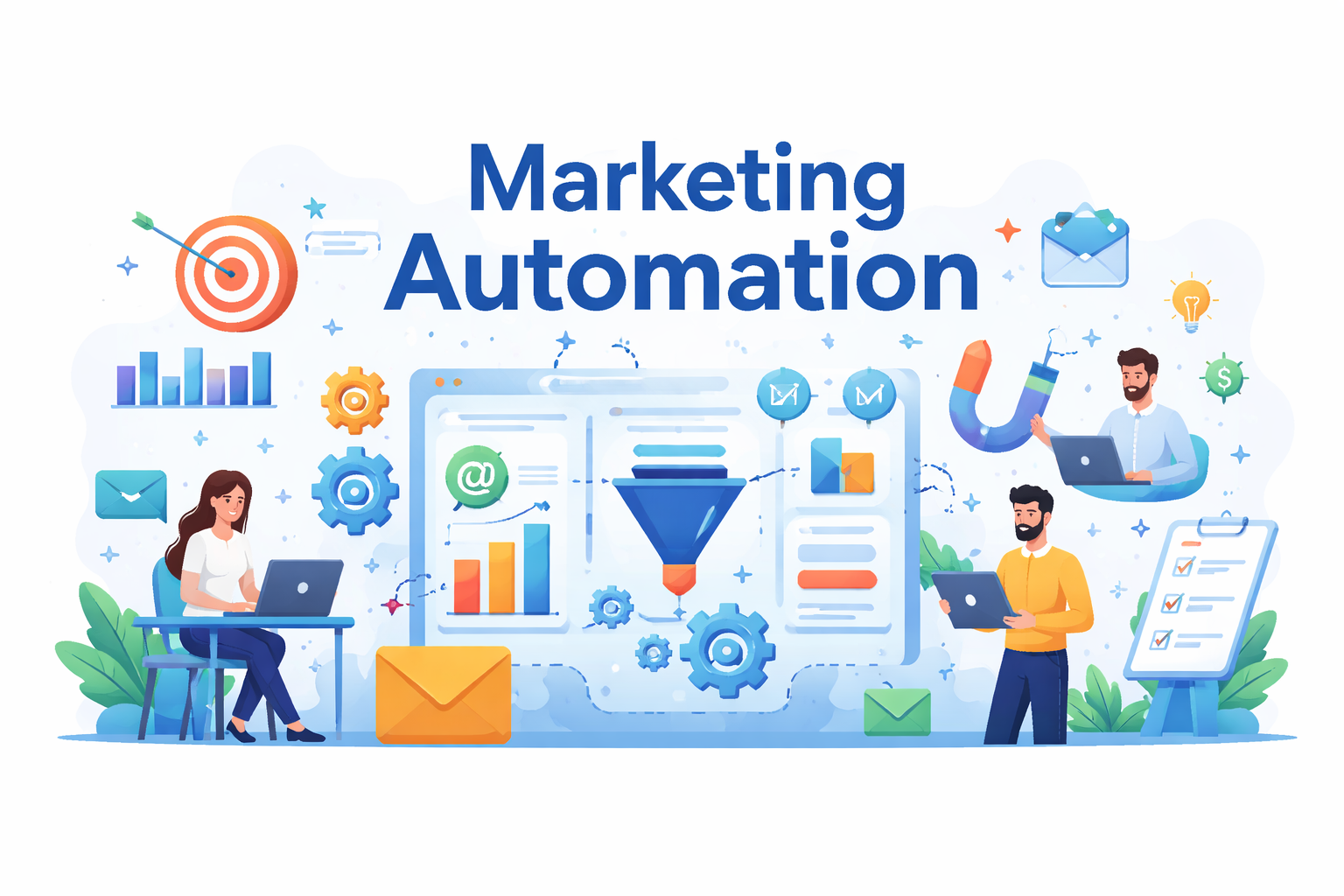
Marketing Automation helps businesses streamline repetitive marketing tasks such as email campaigns, lead nurturing, customer segmentation, follow-up sequences, CRM updates, and campaign reporting. Instead of relying on manual work for every step, teams can use automation tools to build more consistent, scalable, and efficient marketing systems.
For startups, online businesses, SaaS companies, agencies, and growing teams, Marketing Automation is no longer just a “nice-to-have” feature. It has become one of the most practical ways to save time, improve lead handling, reduce human error, and increase marketing efficiency without endlessly expanding headcount.
What Is Marketing Automation?
Marketing Automation refers to the use of software and workflows to automate repetitive marketing processes. These tools can help businesses automatically send emails, score leads, segment audiences, trigger follow-ups, schedule campaigns, and track customer interactions across multiple channels.
The real value of Marketing Automation is not just “doing less work manually.” It is about building a system that allows marketing activities to run in a more predictable, scalable, and data-driven way.
For example, instead of manually following up with every lead, a Marketing Automation platform can automatically send the right message based on user behavior, signup source, purchase intent, or engagement level.
Who Needs Marketing Automation?
Marketing Automation is especially useful for businesses that are starting to outgrow manual marketing operations.
This includes:
startups that need to scale lead generation without hiring large teams
SaaS companies that want to automate onboarding and email nurturing
agencies managing multiple campaigns and client workflows
ecommerce brands that need abandoned cart emails and customer follow-ups
B2B businesses that want better lead qualification and sales handoff
content-driven businesses that want to turn traffic into email subscribers and customers
If your team spends too much time on repetitive outreach, lead tracking, campaign execution, or follow-up work, Marketing Automation can usually provide immediate operational leverage.
Common Use Cases of Marketing Automation
Marketing Automation tools can be used in many different scenarios, depending on the business model and marketing channel.
Some of the most common use cases include:
- Email Campaign Automation
Businesses can automatically send welcome emails, onboarding sequences, promotional campaigns, re-engagement emails, and newsletter follow-ups based on user actions or timing.
- Lead Nurturing
Instead of treating every lead the same way, automation tools help segment prospects and move them through different stages of the funnel with personalized messaging.
- CRM and Pipeline Workflows
Many Marketing Automation platforms connect with CRM systems to update lead status, assign contacts to sales reps, trigger reminders, and improve handoff between marketing and sales.
- Audience Segmentation
Teams can group users by behavior, interests, lifecycle stage, location, purchase history, or engagement level, making campaigns more targeted and relevant.
- Multi-Step Campaign Execution
Automation tools help manage complex workflows that involve email, SMS, forms, landing pages, ads, and internal notifications across multiple touchpoints.
- Reporting and Optimization
Some platforms also include analytics, conversion tracking, attribution data, and campaign performance insights that help marketers improve results over time.
Key Features to Look For in Marketing Automation Tools
Not every Marketing Automation platform is built for the same type of user. Some are focused on email marketing, while others provide broader workflow automation, CRM integration, or AI-powered optimization.
When comparing tools, it is useful to look at features such as:
workflow builder and automation logic
email automation and campaign sequencing
CRM integration
lead scoring and lead tracking
segmentation and personalization
landing pages and form builders
analytics and reporting
AI-assisted campaign optimization
integration with ecommerce or sales tools
ease of use for non-technical teams
The best choice often depends on whether you care most about simplicity, flexibility, integrations, advanced targeting, or pricing.
Marketing Automation vs Manual Marketing
Manual marketing can still work when a business is small, the lead volume is low, and workflows are simple. But once campaigns become more frequent and customer journeys become more complex, manual processes start to create bottlenecks.
Marketing Automation makes it easier to maintain consistency, scale campaigns, and reduce the operational burden on small teams. Instead of remembering every follow-up or manually moving data between tools, businesses can rely on predefined systems and triggers.
That said, automation does not replace marketing strategy. It works best when the business already understands its audience, messaging, and conversion goals. Good automation makes a good strategy more scalable. It does not fix a weak one.
Best Marketing Automation Tools
There is no single best Marketing Automation tool for every business. Some tools are better for startups, some are stronger for enterprise workflows, and others are more suitable for ecommerce, SaaS, or agencies.
On this page, you’ll find Marketing Automation tools that help with:
campaign automation
lead generation workflows
customer follow-up sequences
audience segmentation
email marketing automation
CRM-based workflow management
AI-enhanced marketing execution
As this category grows, we’ll continue adding more tools, comparisons, and practical recommendations to help you choose the right solution.
Final Thoughts
Marketing Automation is ultimately about leverage. It helps businesses do more with less by reducing repetitive work, improving process consistency, and creating more scalable marketing systems.
Whether you are trying to automate lead nurturing, improve campaign execution, or build a more efficient customer journey, the right Marketing Automation tool can make a measurable difference in both speed and results.
If you’re exploring this space, start by identifying your main bottleneck: email workflows, lead handling, segmentation, CRM coordination, or campaign execution. From there, it becomes much easier to choose the right platform.
As a supplementary reference, the external video below gives a helpful overview of Marketing Automation and how businesses use it to streamline repetitive marketing tasks and improve workflow efficiency.